

Growing up, there was a fear of Russia, leftover from the “Red Scare.” My grandmother, who I worshipped, came from Russia*, so in my mind, the fear was unfounded.
Now the big fear is China. But having worked with people from China, this fear also feels unfounded.
Yes, I recognize the atrocities committed by the Russian and Chinese governments. While both generate criticism, there’s no comparison. Russia is a Second World country, moseying along, primarily gaining notoriety for cyberattacks, military aggression, and befriending miscreant reigns.
Having evolved from a communist model in the 1990’s, Russia’s economy is now considered oligarchic capitalism with a small group of elites controlling their industries, and the rest of the country, eking out a living.
China, on the other hand, has transformed from being agrarian into one of the world’s largest economies within a few decades. It’s lifted millions of citizens out of poverty and created mind-blowing infrastructures, which surpass those in developed nations, including the United States.
Because industrialization was thwarted in China until recently, they were able to skip over stages of development, such as focusing on the creation of cellular networks and mobile devices rather than installing LAN lines. The government also heavily invested in transportation, engineering projects and social programs, erecting astonishing high-speed railroad networks, large-scale bridges, hydroelectric dams, modern airports, solar and wind farms, sustainable urban hubs, high yield foods, highly efficient container ports, and more.
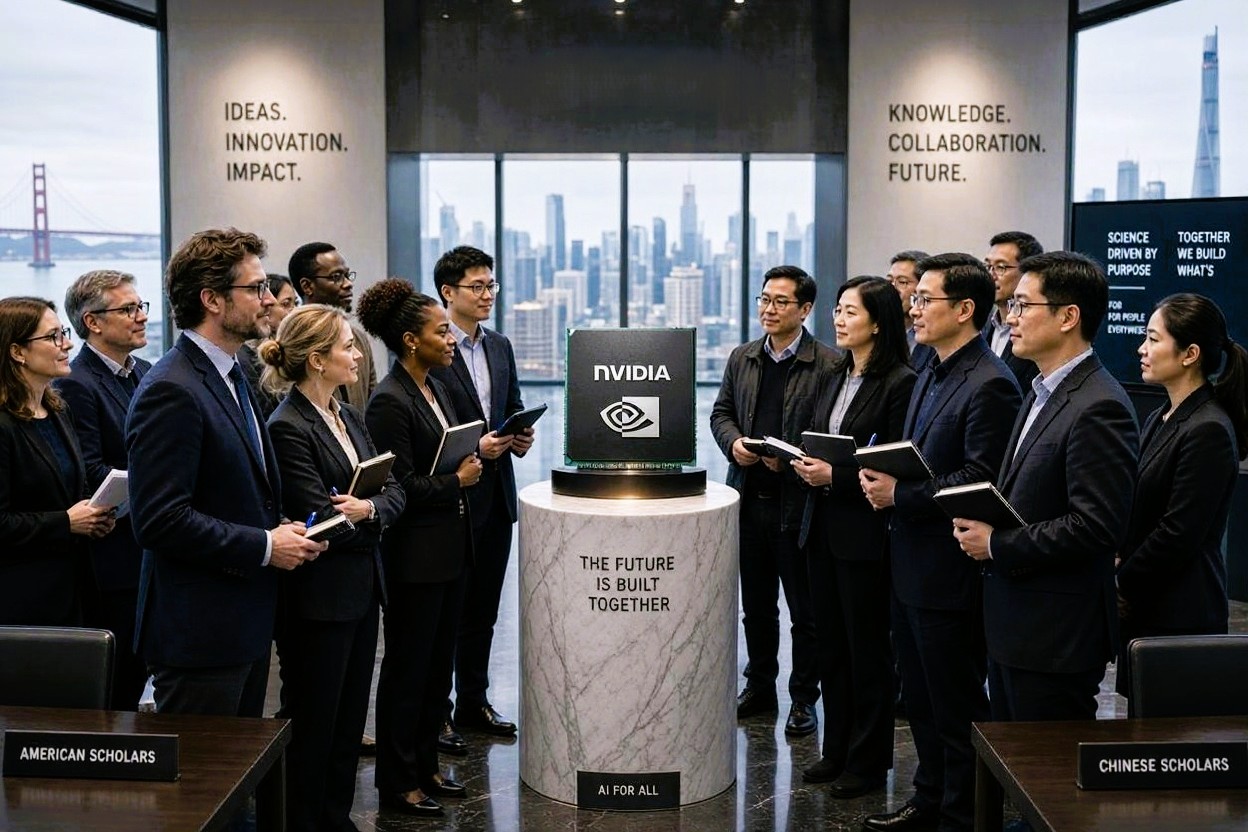
While the U.S. government is aflutter over Nvidia chips and industry intelligence being diverted to China, one of America’s greatest assets—its people—are stifled and overlooked.
Allow me to explain.
Innovation, leadership, and social changes often come from non-traditional people. It’s the nerd fiddling in the garage who creates a breakthrough application. It’s the person raised in rural Georgia who becomes a nuclear engineer and then president. It’s a young woman, raised by a single mother in Watts (Los Angeles), whose poetry captured the nation’s attention and need for unity and togetherness.
Greatness might be a child in impoverished West Virginia, Mississippi, Arkansas, or New Mexico, who doesn’t have a chance to achieve their potential because the obstacles are too great. From the get-go, their mother might not have access to prenatal or newborn care. As the child grows, food might be scarce, nutrient-deficient, or primarily processed. When they start kindergarten, they might be behind other children, who were sent to preschool and the schools they attend could be underfunded with fewer resources, uncertified teachers, and limited extracurricular activities.
Unstable living conditions might impact learning along with negative influences from peers. Upon graduation, they probably don’t have the money to attend college unless they earn good grades and receive a scholarship.
What are their options? Low-wage employment. Economic instability. Limited opportunities to move up the ladder. Continued cycles of poverty.
Currently, 16% of all children in the United States—11.4 million kids total—are living in poverty. That’s a lot of potential, which isn’t being nurtured to become tomorrow’s developers, engineers, researchers, healthcare professionals, teachers, and other essential roles.
China is zooming past America because they’ve invested in human capital. In 2025, Chinese universities produced more than 77,000 science, technology, engineering, and mathematics (STEM) PhD graduates compared to approximately 40,000 in the United States.
The attainment of advanced AI chips and servers—whether lawfully or back-alleys—is a footnote in the overall advancement of a country’s future when competitiveness is tied to having a skilled workforce with expertise in STEM fields.
*I knew she was from Kiev, which I later discovered was Ukraine and not Russia.


Leave a Reply