

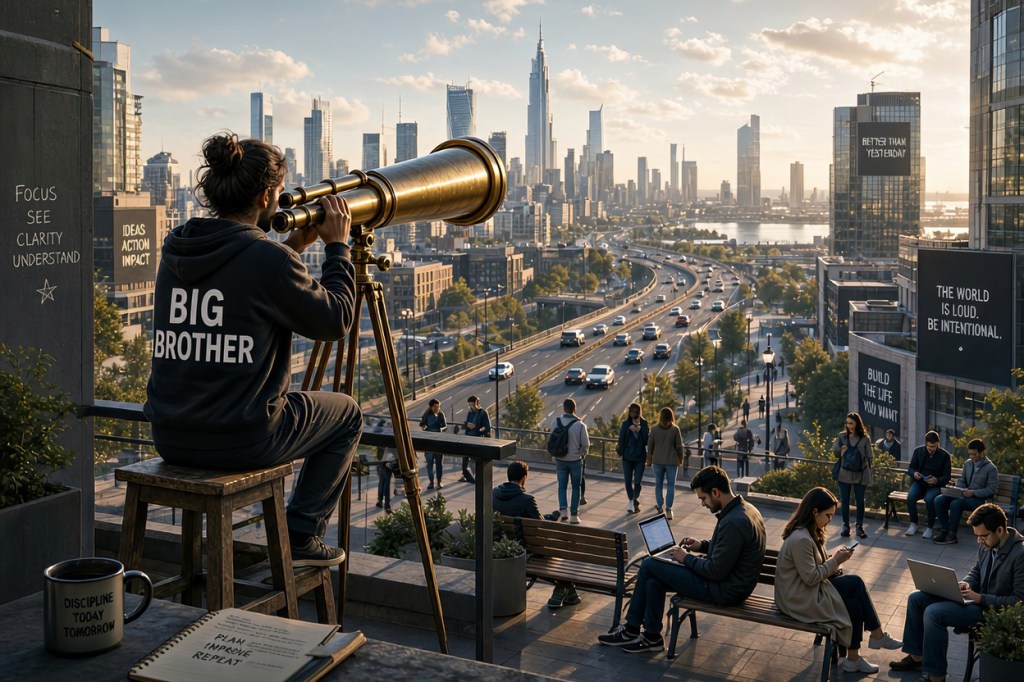
A friend visited on Saturday and noticed I had cameras throughout the house. I’d forgotten about them. My husband installed them years ago so he could spy on our cats when we were away.
Nothing showcases maturity like sitting at an airport, giggling when you spot a cat sauntering down the hallway or lounging on the sofa.
My friend, however, was deeply concerned, thinking I was recording him. He was so paranoid about being passively surveilled that he’d taped over his smartphone camera. He was equally distrustful of the navigation screen in his newly purchased car, claiming “They’re watching us.”
It’s been 42 years since George Orwell’s groundbreaking novel 1984, which introduced Big Brother, an omnipresent and menacing character who continuously watches and allegedly assesses and pinpoints aberrant behavior.
There’re always two sides to every circumstance. Research shows the use of close circuit TVs (CCTV) reduces crime by 13%. It also helps catch offenders, such as the two terrorists in the 2013 Boston Marathon bombing.
Unbeknownst to me, in-car cameras, associated with Driver Monitoring Systems (DMS) can track drivers’ eye movement, blink rate, head position, and more, and then trigger an alert when drowsiness, distraction, or a medical emergency is detected. The systems don’t store or transmit capture data and can’t match an image to a name.
Personally, I wouldn’t mind if my 20-year-old car barked at me when I’m not paying attention or could collide with another vehicle. The goal of DMS is to prevent accidents not capture personally identifiable information.
Considering the other side of the steering wheel, drivers eagerly invest in dashcams, actively recording a plethora of incidents from reckless drivers to interactions with law enforcement. And vice versa. Safety and security officers are recording their interactions with drivers and other offenders.
My weekend visitor was convinced his smart phone camera was a portal for surveilling him. In theory, it’s possible, but only if malicious software was installed on his phone. Ages ago, I received a nefarious email, saying the camera on my PC had been accessed and if I didn’t pay a chunk of change, they were going to release the footage.
Contemplating the email for a full 60 seconds, I came to the realization that even if they had captured footage, what had they observed? Me missing my mouth while looking at my monitor and drinking coffee at the same time? Me frowning, reading out loud, or putting my cat on the floor after he tromped on my keyboard?
While mass surveillance is intimidating, cameras have been used for decades in airports, retail locations, casinos, convention centers, public spaces, government buildings, busy intersections, parking garages, and more. What’s new is the use of AI to analyze behavior, identify individuals, and pinpoint abnormal or deviant occurrences.
The goal continues to be enhanced safety, improved response rates, and reduced criminality. To be honest, this form of surveillance feels less invasive than other points-in-time, when friends, neighbors, associates, and others were labeling people as disloyal (Yellow Peril), threats (Japanese American internment), communists (McCarthyism), and radicalized (War on Terror, following 9/11).
This I do know. Taco Bell is using voice AI to capture and expedite drive-through orders. The result is a 1.5% sales lift, 6% increase in drive-through satisfaction, and better crew retention.
Turn on the cameras and fine-tune the cheerful, AI-trained voice. The faster I can get my Taco Bell order, the better!


Leave a Reply