

Last week, I stumbled upon rubbish.
I noticed on LinkedIn an eye-catching post for a job board. Intrigued, I browsed to the site, entered my credentials, and started exploring their open positions. One was with a company that creates software to help churches more effectively engage with their congregants.
Pausing, I contemplated whether I could enthusiastically tout their solutions given I’m Jewish. No. It wasn’t a good fit.
The next job was with a marketing group that supports foster care agencies and pregnancy resource centers, flaunting their core belief that all people are made in God’s image and are worthy of love, respect, and dignity.
Whoa. That was a worse fit. Not because I’m against their mission, but because their jobs are listed on a job board that applauds non-woke, merit-based jobs, which recommend job seekers sign a pledge, expressing their intent to focus solely on their professional duties, not divisive issues that impede workplace productivity.
Liberally sprinkled across the job board is blather about upholding constitutional rights, advocating for Americans and Christians, and opposing woke policies.
If all people are made in God’s image and worthy of love, respect, and dignity then why disqualify them as potential employees?
What constitutional rights advocate discrimination and champion ignoring social, environmental, equity, and ethical issues?
Lawyer, founding father, Vice President, and President John Adams was a critic of slavery, mixing religion with state, and imposing duties on imported commodities. He signed the Treaty of Tripoli in 1797 which states the States of America aren’t founded on the Christian religion. He envisioned a republic where people of all faiths or no faiths at all could coexist peacefully.
Back to the woke-free job board, which “honors and celebrates the founding liberties that have made the American free-market system the most successful economic engine in the history of the world.”
These liberties have enabled innumerable immigrants—of varying ethnicities and faiths— to start unimaginably successful businesses from Andy Groves (Intel) to Pierre Omidyar (eBay), Sergey Brin (Google), Levi Strauss (Levi Strauss & Co.), Vinod Khosla (Sun Microsystems), Jensen Huang (NVIDIA), Tony Xu (DoorDash), and Henry Heinz (Kraft Heinz).
Immigrants continue to be the foundation of America, whether bringing crops to market or founding unicorns.
Companies that support diversity, equity, and inclusion (DEI) are 35% more likely to outperform competitors on financial returns (McKinsey). Seventy-six percent of job seekers say diversity matters when evaluating offers (LinkedIn), and 86% of Gen Z employees are more likely to stay with employers that support DEI (Catalyst).
According a 2026 Catalyst/Meltzer Center survey of 2,267 U.S. employees across industries, 80% of employees and business leaders remain committed to DEI and support workplace inclusion.
The job board I blundered upon claims they’re “uniting the community of good businesses and reliable, motivated job seekers.” The statement has multiple implications, principally businesses and workers who don’t align with their myopia are bad, unreliable, and unmotivated.
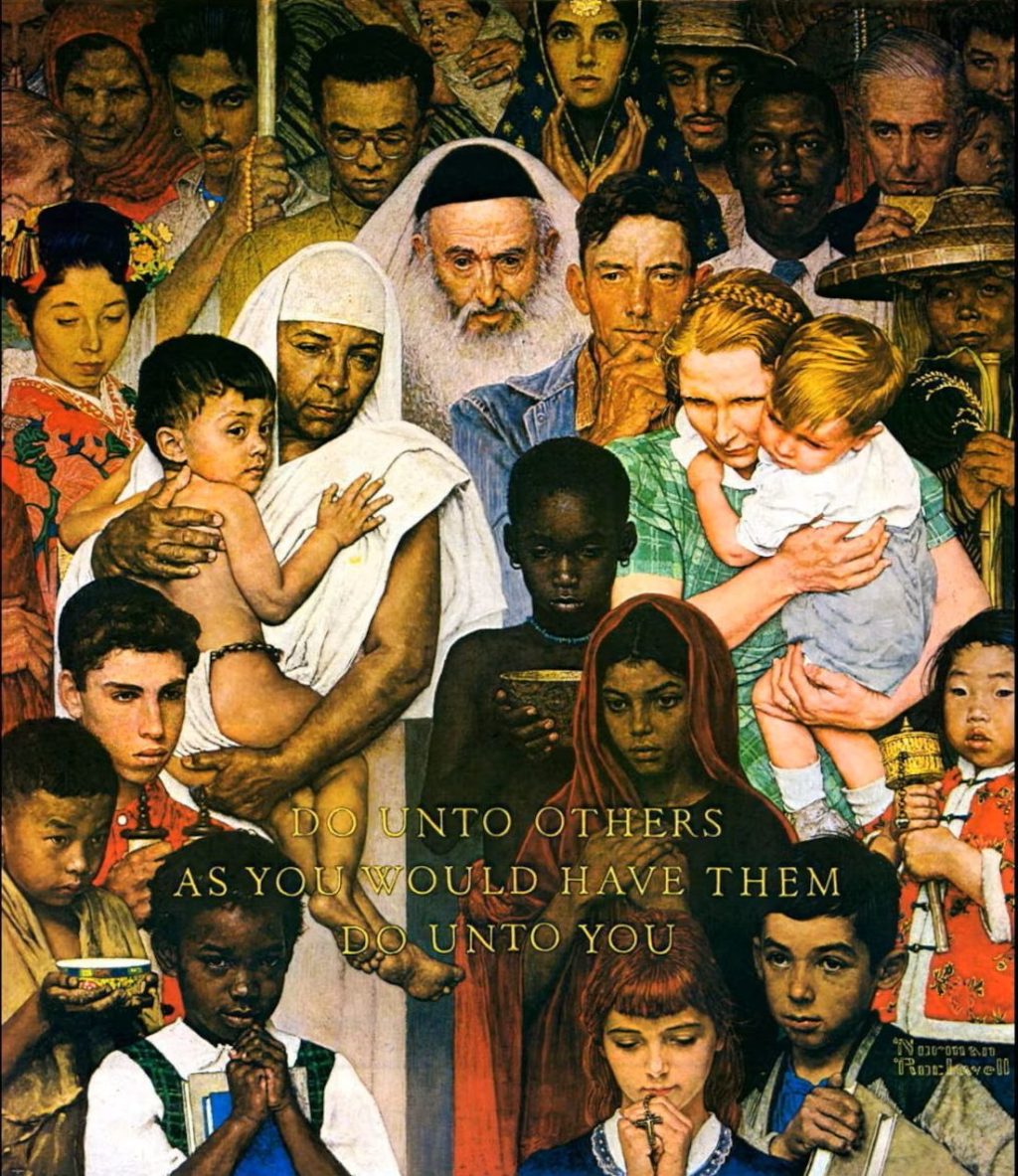
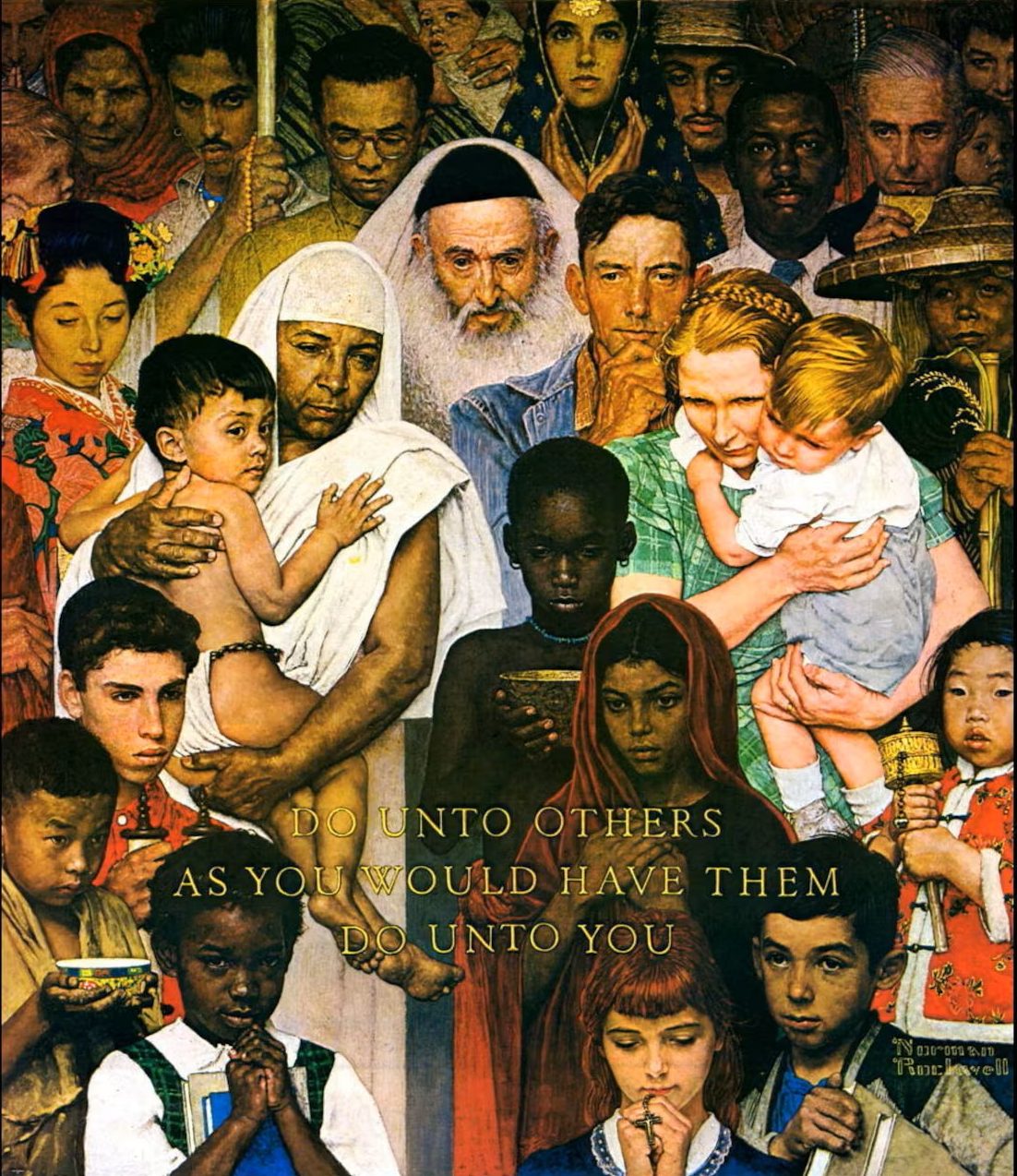
In April 1961, American painter Norman Rockwell painted the Golden Rule, a visual expression of the universal ethical principle—treat others as you want to be treated. The painting symbolizes global unity and shared humanity across diverse racial, cultural, and religious backgrounds.
Rockwell’s paintings lean towards utopia. The Golden Rule is an exception. It visualizes a better world through acceptance.


Leave a Reply