

Originally published on LinkedIn on August 21, 2026
Years ago, at a convention, I chatted with a hospital administrator with a Northern California healthcare conglomerate. He commented they didn’t have enough beds to support their population. The closure of neighboring rural hospitals was putting a strain on his larger, urban facilities.
Around the same time, I recalled watching ambulances come-and-go at a large, for-profit hospital and medical center in Las Vegas where my father-in-law passed away. My husband was busy trying to get his stepfather’s records and possessions and I was aghast at the number of people filling the chairs and lining the walls by the emergency department.
I asked someone why various ambulances didn’t drop off patients. I was told if the case wasn’t life-or-death, and if beds weren’t available, ambulances were turned away.
Eck!
This memory surfaced recently while reading of the closure of pharmacies, grocery and convenience stores, and the continuing shuttering of rural and suburban hospitals.
Aristotle (384-322 BC) wrote extensively about the purpose of government and society, professing, human beings are made for life in a community, and only within a well-ordered community can they become genuinely good and genuinely happy and achieve much more than living alone.
If a society is defined as a large metropolitan area, it would probably be somewhat healthy with the establishments that citizens need to learn, work, and enjoy a quality of life. But if you dissect the society, down to the community level, especially rural and low-income towns and neighborhoods, issues emerge.
There are food deserts in which the distance to grocery stores and lack of reliable transportation are barriers to affordable, fresh, and healthy food. This is made worse with the closure of grocery stores.
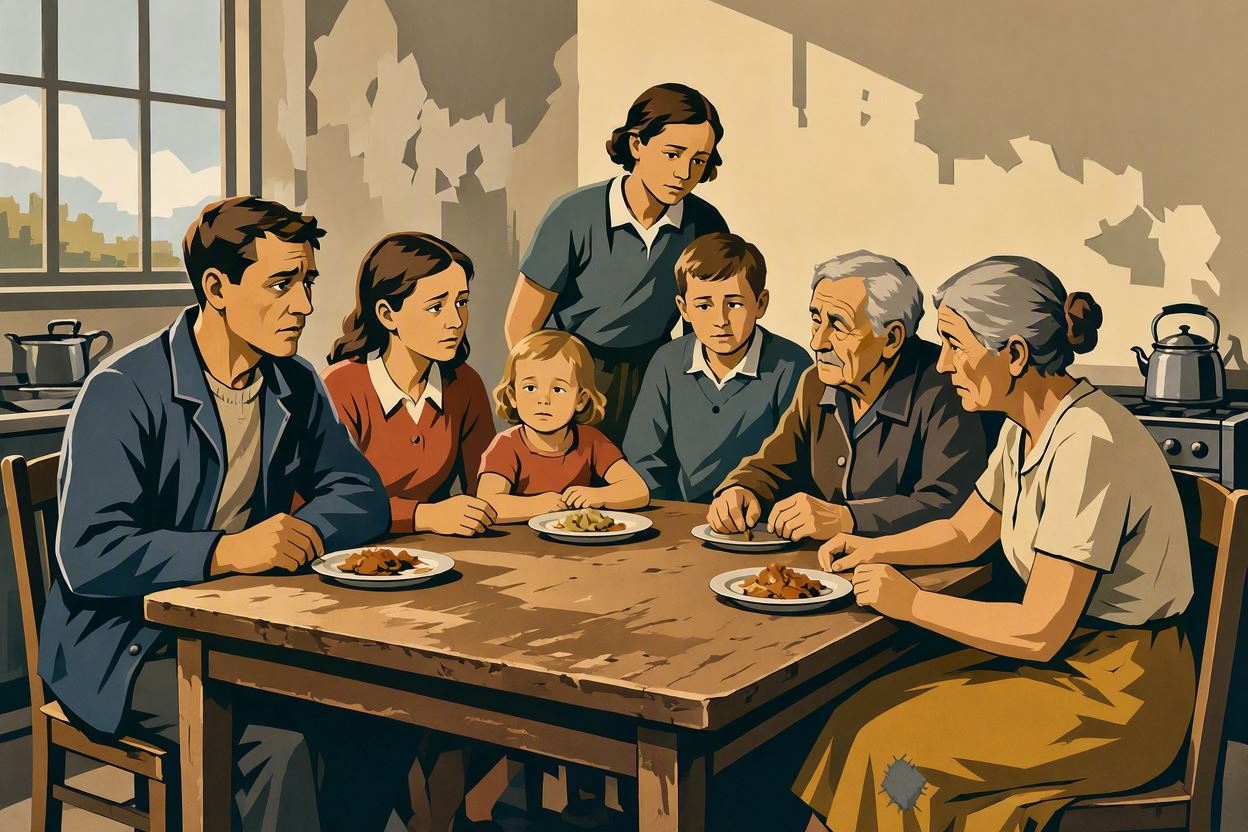
The result is people relying on corner and convenience stores, which offer a limited selection of nutritious foods. Instead, what’s available is processed, calorie-dense fast and packaged food, which contribute to obesity, diabetes, heart disease, and other chronic illnesses.
The latest news also includes the closure of convenience stores like 7Eleven, further decreasing the consumption of healthy food with the remaining options being restaurants and fast food, and what’s available on the shelves and freezer cases of dollar stores.
My goof. Dollar Tree and Family Dollar stores are also closing, leaving few places to buy food in inner cities, impoverished, and lightly isolated areas.
Lack of access to healthcare services is equally calamitous. From 2010 to 2023, 108 more hospitals closed than opened. Presently, a third of rural hospitals are financially instable.
“A company has a responsibility beyond making a profit for stockholders: it has a responsibility to recognize the dignity of its employees as human beings, to the well-being of its customers, and to the community at large.”
David Packard, Co-founder of Hewlett Packard
Approximately 22 million Americans (12.8%) live in low-income, low-access areas in urban and rural communities. Even more startling, 67% of Americans live paycheck to paycheck, an increase of 4% from 2024 to 2025.
Whether living in a low-income area or counting lose change every week, there isn’t extra money for gas or more reliable transportation to obtain food, household goods, and services, including routine health and dental care, laundry detergent (and laundromats), banks and financial institutions, vocational and adult training, and more.
Returning to Aristotle’s original vision. People within communities are somewhat similar, wanting koinonia, taking part in a shared way of life, which in modern terms equates to maintaining or increasing one’s quality of life and that of their family.
Unlike ancient Greek societies, which were primarily agrarian and barter, citizens in modern societies depend on stores for what they need. While food banks fulfill some of the need for sustenance, they’re a patch and not a long-term solution.
The question, therefore, becomes, do companies have a social contract to their customers even if it potentially impacts profitability? A hospital, grocery store, or pharmacy in a rural or low-income area will always have customers, but their viability may be strained with reduced sales, purchase of lower priced items, theft, and in the case of hospitals, inadequate reimbursement and consistent cash flow.
Corporate Social Responsibility (CSR) is a voluntary business model in which companies integrate social, environmental, and ethical considerations into their operations and decision-making. The social aspect hinges on taking responsibility for the impact on employees, customers, and communities, along with committing to fair labor practices, promoting diversity and inclusion, ensuring safe and healthy work environments, and engaging in community-focused initiatives.
Scandinavian countries — Denmark, Norway, Sweden, Finland, and Iceland — are considered the most socially responsible nations in the world, creating long-term societal and environmental benefits along with profitability. A logical bioproduct is Scadinavian countries consistently top the World Happiness Chart. People aren’t having to make difficult decisions when it comes to the basic necessities like food, healthcare, and services.
 Scribbles
Leave a comment