

Originally published on LinkedIn on July 15, 2026
For three to four hours a night, my mother would do needlepoint. Her work was exception—even stitches and neatly trimmed threads at the back of the canvas.
A few months ago, I noticed a stack of completed cross-stitch pieces at a thrift store. While I wasn’t fond of the images. I spent several minutes studying the backs of the canvases. No lose threads and every stitch perfect. The needlepointer was obviously in the top one percent.
Composer Niccol Paganini’s 24th Caprices for Solo Violin, Op. 1 is so brilliant it inspired countless composers to create their own interpretations, including Franz Liszt, Johannes Brahms, Sergei Rachmaninoff, Andrew Lloyd Webber, and a modern interpretation in 1970 by George Rochberg.
Paganini’s compositions were in the top one percent.
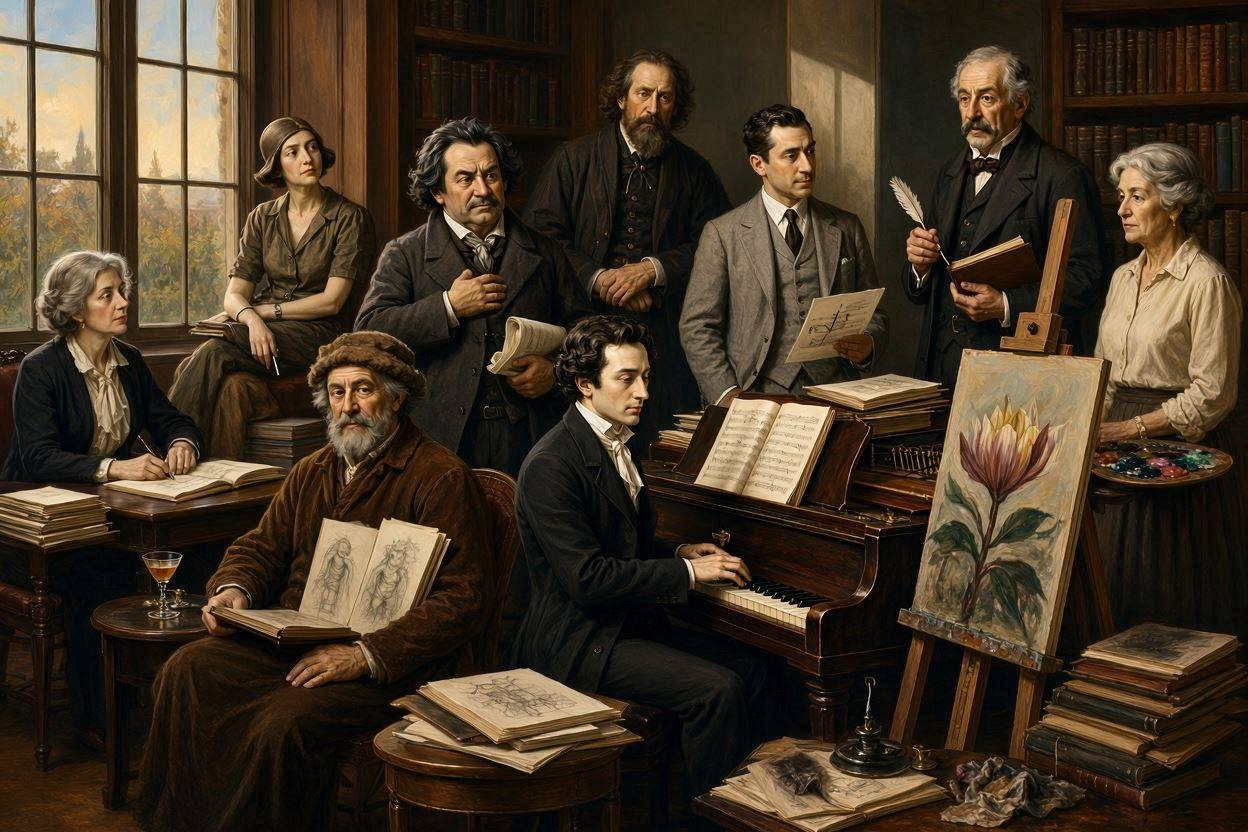
Rising to the one percent can only be attained by humans and not AI. You can write a prompt, asking that content be written in the style of Fyodor Dostoevsky, Charles Dickens, Franz Kafka, or Virginia Woolf, but it can’t reach their level of genius, the one percent.
Only the human experience from childhood through adulthood generates the physical, emotional, and cerebral observations and occurrences that foster the brilliance, discipline, and creativity necessary to produce what is truly original, exceptional, and enviable.
The canyons and valleys of the brain, which house a person’s experiences, can’t be replicated.
In humans, three fourths of the cerebral cortex is uncommitted, waiting to be filled with memories. This “’association area” interprets, integrates, and acts on information processed by sensory areas, including vision, auditory, somatosensory input, patterns, language, emotion, and more.
These inputs—a warm spring day, crunch of snow under foot, wildflowers and grasses blowing in the wind, thrill of a live symphony, smell of a school cafeteria, and purring of a kitten—are what fuel imagination and can’t be imitated because each person’s perceptions are different.
It might feel like AI is understanding, empathetic, and inspired. However, it doesn’t possess the ability to “feel” emotions. It’s simply responding to learned patterns.
While I depend on my CopyMind digital twin for valuable advice, it doesn’t come from the heart, but guidance, gleaned from hundreds, maybe thousands, of mental health professionals. My digital twin inhales what I tell it, jiggles it around for a few milliseconds then spits out an answer.
While the originality of the top one percent is outta’ AI’s grasp, the ability to access the combined wisdom of professionals (and all of humankind) is the crux of AI’s greatness.
It can exceed the one percent, but not in the way humans can shine.
AI can and will solve enigmatic issues, which defy our capabilities (unless you can do a gazillion calculations in the blink of an eye). It applies encyclopedic learnings to discover what was previously indiscernible. And it helps level the playing field, enabling anyone with a PC to access and engage with content, using natural language, from elementary-school lessons to university research in a variety of formats with the ability to easily translate into a multitude of languages.
AI becomes an invaluable tool that challenges us to use our intelligence and inventiveness in new ways.


Leave a Reply