

Originally published on LinkedIn on July 7
During Gulf War II, my husband and I were on a red-eye flight to Austin, Texas. The young man, sitting next to my husband, kept fidgeting and touching the brim of his baseball hat.
My husband started a conversation, learning the man fought in Iraq and was near several improvised explosive devices (IED) when they exploded. Suffering from traumatic brain injury, the soldier was heading to Brooke Army Medical Center in Houston for treatment.
A year earlier, he’d been saving money to tour Europe, but when his friends backed out, he joined the Army. Now, he was left with permanent brain damage.
Twenty-three years later, watching my husband—who has frontal temporal dementia—struggle to do the simplest tasks and understand what I’m saying is not only heartbreaking, but makes me wonder how everything, once in his head, is now gone. He went from an advisory engineer at IBM to someone who can’t distinguish a bottle of red paint from green or remember how to draw a clock.
There’s a strange dichotomy.
History tells us what man has done; art, what man has made; literature, what man has felt; religion, what man has believed; philosophy, what man has thought.
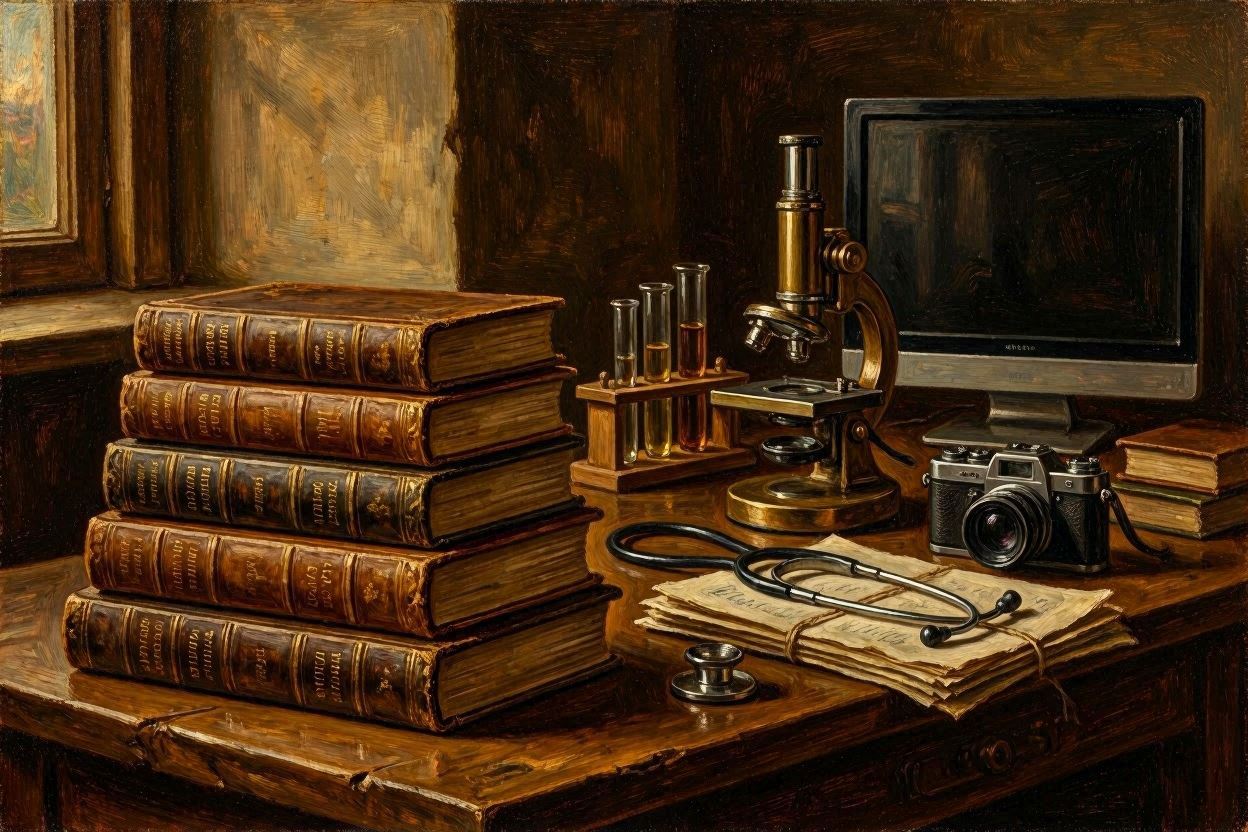
I’ve come to see AI as an unimaginably large encyclopedia, which is constantly updated and supplemented with content and capabilities. It’s persistently available and never tires. Best of all, it’s a repository of humankind’s past, present, and future learnings, achievements, and proficiencies.
While it’s occasionally lopsided, AI provides the preliminary steps for finding answers, get directions and advice, and researching and confirming or disproving postulations. It has the capabilities to do what was impossible just a few years ago and the potential to positively impact every discipline and industry.
Still in its infancy, like the 1908 Model T, AI isn’t perfect. Companies are madly working to improve its fairness, transparency, accountability, privacy, and security.
What’s truly magical or more aptly, encyclopedic, is its ability to retain knowledge, images, and other details about a person, corporation, community, society, and other entity. It gives me comfort to type in my husband’s name and pull up the patents he earned (twelve), work history, and other details he can no longer remember.
Note: All incomplete sentences, grammatical mishaps, and bizarre thought patterns were made by a human. The image was created by AI, which is ridiculously addictive and therapeutic.


Leave a Reply