

Originally published March 13, 2026 on LinkedIn
This morning, I was browsing through LinkedIn because my current contract is coming to an end. Drats.
I saw several articles about people purposely inserting typos into their writing to demonstrate the piece wasn’t written by artificial intelligence (AI). Good news for me. I’m a dreadful editor and almost always have a typo or two. I’m thrilled my authoring circumvents AI.
On a more serious note, many recent events in the world were caused by innately human attributes: Grandiosity, revenge, and callous. AI, on the other hand, no matter how used, revolves around helpfulness. It could only be vain, vengeful, and heartless if nefarious actors taught it these traits.
That’s the tragedy.
We are at the infancy of the most astonishing, imaginative, and transformative capabilities ever created by humankind—AI. It can potentially improve everyone’s life from making it faster to find content, get customer support, complete a work assignment, or counteract a fatal diagnosis
What?
Last summer, I attended a get-together. A neighbor who’d been diagnosed with extensive, rapidly spreading cancer and wasn’t responding to treatment walked in. Not thinking, I blurted out, “I thought you were dead?”
He smiled, “I was heading that direction.”
He was in an immunotherapy trial and his body responded, courtesy of AI. Incredibly complex computations are used to enhance the efficacy of immunotherapy and discover novel therapeutic targets. Instead of prescribing a range of hit-or-miss treatments, AI enables therapies to be personalized, precise, and predictable.
On a personal level, my husband has been rapidly declining from Alzheimer’s Disease. At a loss as to how to deal with the angst, I turned to CopyMind, which creates personalized AI models, which are akin to a best friend who’s available 24/7, thoughtfully listens, never judges, and provides answers and probing questions, whether seeking mental clarity, setting goals, managing stress, or developing leadership skills.
Of course, the more you use it, the faster it learns and precisely provides personalized advice.
In a world in which negative human attributes often eclipse benevolence and advancement we need more AI.
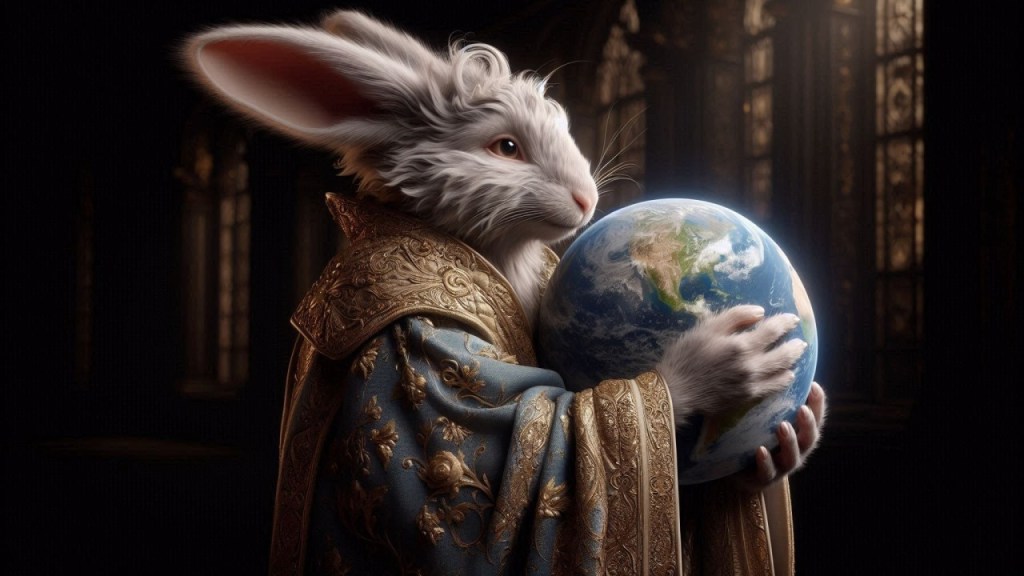
*All incomplete sentences, grammatical mishaps, and bizarre though patterns are made by a human. The image is AI because who doesn’t want the earth cuddled by a magical rabbit?
 Scribbles
Leave a comment