
Originally posted on LinkedIn on February 12, 2023
For the past few weeks, the technology de jure has been artificial intelligence (AI) with Microsoft announcing new AI-powered Microsoft Bing and Edge search on Tuesday[1] and the building enthusiasm around OpenAI ChatGPT.[2]
While AI is a teenager in the age of rapidly emerging, futuristic technologies, the ability for everyday Joes and Janes to pose a question to a smart chatbot and get a robust response is new. A few weeks ago, a contact on LinkedIn gave ChatGPT a prompt to write a Star Trek-themed script with guest appearances from Star Wars characters. He posted the resulting dialogue, which was technically and grammatically correct, but stilted and banal.
He also asked ChatGPT to create an image, using the cue, “Star Trek meets Star Wars.” The resulting image was akin to something you’d see in a 1980’s MTV music video, a swirly blue stratosphere with two hovering spacecrafts. Richard Dreyfus’s mashed potato rendition in Close Encounters of the Third Kind was far more inspiring.
A few days later, an associate asked ChatGPT to write a blurb, announcing his recent layoff along with a list of resources for sequestered tech workers, facts about the layoffs, and rumors that AI was used to select pink slip recipients.
No doubt, faster than he could write, the chatbot belched out a few paragraphs. It was well-written, sharing the resources and communicating that 160,000 people have been recently laid off in the tech sector.
Providing accuracy, but missing perspective
Here’s the catch. Both these instances lacked the zest, which colors how we, as humans, communicate. Don’t get me wrong, I like chatbots. I’m thrilled when I can scribble out an issue and a chatbot can either provide me with the answer or point me in the correct direction. I don’t even mind talking to one on the phone because like most humans, I lack patience. If I have an issue or need, I want an immediate response. Any response is better than having an issue weigh on my mind or listening to Muzak* while on hold for an hour.
Returning to the blurb about an associate’s lay-off. The 160,000 number lacks context. In the twelve months of 2022, 1,044 tech companies laid-off 159,786 workers.[3] The real story is that in the past five weeks, 97,996 workers were jettisoned by 321 companies.[4] The flow of the discharged is like decanting a keg into a vessel designed to hold 750 milliliters.
The chatbot shared four resources, but three had generic names – Out of Office, Layoff Support, and Tech Job Hunter – with no associated hyperlinks. If you were to plunk these phrases into a search engine, there’s no way the links to the sites would have materialized on the first (or second) page of search results. And I don’t think Microsoft’s “copilot for the web” would have been of much help.
“Mr. Utterson and the lawyer was a man of rugged countenance, that was never lighted by a smile; cold, scanty and embarrassed in discourse; backward in sentiment; lean, long, dusty, dreary, and yet somehow lovable.” The Strange Case of Dr. Jeklyll and Mr. Hyde, Robert Lewis Stevenson
Just like computer scientists train machine learning algorithms, the need for the “human touch” is necessary for the content generated by a chatbot, whether snuggled within an app, popping up while clicking through a website, or trying to help on the phone.
Recognizing and optimizing its strengths
Engineers in white shirts – and a group of brilliant “human computers” in heels – used pen and paper, slide rules, and primitive, electronic computers to put the first man on the moon. This astonishing accomplishment, when compared to what’s possible today, would be on the tenth floor of a skyscraper that represents humankind’s scientific and technical accomplishments.
AI, started out on the 40th floor and has now risen to the 100th, past its formative years and its initial foray into masquerading as a human when IBM Deep Blue beat world chess champion, Gary Kasparov in 1997. The fundamental strength of AI, however, isn’t its ability to impersonate a human – such as writing poetry, composing music, and creating art – but engaging in pursuits that exceed what’s humanly possible.
While a human may have encyclopedic knowledge, it could never retain and instantaneously recall a petabyte of information, which is often necessary for AI. Consider the more erudite Bing, which provides detailed responses to multi-dimensional queries, such as “Suggest an itinerary for a 5-day vacation to Tahiti, including where to stay and eat.” The browser, using AI, needs to simultaneously search for popular tourist spots, lodging and restaurants.
Preceding the arrival of super-charged chatbots, AI has been part of most people’s lives from using face ID to unlock phones to enabling digital voice assistants like Siri and Alexa, surfacing movies and TV shows based on viewing history, supporting smart features in cars that adjust speed and detect people and obstacles, and of course, powering gaming and animation that turns what’s imagined into virtual and augmented reality.
“I was sick – sick onto death with that long agony; and when they at length unbound me, and I was permitted to sit, I felt that my senses were leaving me. The sentence – the dread sentence of death – was the last of distinct accentuation which reached my ears.” The Pit and the Pendulum, Edgar Allen Poe
While these capabilities are groundbreaking, they’re subordinate to AI’s unrefuted potential to unravel complex and confounding challenges, which otherwise couldn’t be solved. Last summer, DeepMind, one of the world’s leading artificial intelligence labs and a subsidiary of Google’s parent company Alphabet, used the algorithm AlphaFold to predict the 3D structures of nearly all the proteins known to humanity.[5] The ability to see how proteins fold into complex shapes, and thereby better understand their behavior, enables hundreds of thousands of scientists to validate new vaccines, fight antibiotic resistance, tackle plastic pollution, and more.
DeepMind is also being used to model nuclear fusion in hope of developing a cheap, zero-carbon energy that can replace fossil fuels. [Let’s hope the next evolution in electric vehicles isn’t pint-sized nuclear reactors under the hood].
Putting it through the paces
Improving healthcare delivery, accuracy and efficiency is made possible with AI. Unlike a human, digital systems never tire or lose focus. Every minute of the day, they can monitor and analyze data from patient monitors, diagnose and predict outcomes, and interpret medical images. The use of digital twins, digital representations of real-world settings, products, systems, or processes, enables medical students and professionals to train and perfect their skills in replicated environments on virtual patients, using simulated equipment.
These digitized worlds incorporate a vast amount of data that makes it possible to not only test treatment protocols on diverse patients, but model their individual genome, physiological characteristics, and lifestyles to create personalized treatment plans. It also provides a risk-free environment for validating the performance of new medical equipment, and training practitioners.
Digital twins and the emerging metaverse, a collection of hyper-realistic, immersive 3D virtual worlds amplified by AI-powered engines, have vast applications and possibilities from optimizing the efficiencies of supply chains, manufacturing facilities, utilities, and retailers to modeling next-generation cars and aircrafts, green buildings and systems, infrastructures and construction projects like bridges and overpasses, and much more.
Recognizing “what could possibly go wrong”
The use of AI, however, isn’t without drawbacks. I peppered this story with the first paragraphs from well-known classics because despite chatbots’ ability to cobble together words, I seriously doubt they’ll be able to “observe” the world around them and spin them into vibrant analogies and dazzling prose that blossom into masterpieces.
The literary missteps of chatbots, in the grand scheme, are infinitesimally small when you consider the harm an AI model could do in the hands of a Rasputin. The same algorithms used to create life-saving drugs can also be used to make deadly chemicals and mutant viruses (both the cootie and digital varieties).
In the same vein, they can generate harmful instructions, misinformation, and biased, sexist, and racist content. Even a human is prone to error when you consider the similarity in spelling and pronunciation of seaman, seamen, see men, and semen. Considering the latter, a search engine – without or without AI – can’t distinguish between someone simply wanting to learn about the human body and another person, searching for… you get the idea.
This simplistic example isn’t benign when an AI-powered engine misinterprets an instruction during a critical process, instigates a financial crisis, misjudges while piloting an autonomous vehicle, and increasingly common, manipulates perceptions (and reality) by spewing propaganda and false data.
“No one would have believed in the last years of the nineteenth century that this world was being watched keenly and closely by intelligences greater than man’s and yet as mortal as his own; that as men busied themselves about various concerns they were scrutinized and studied, perhaps almost as narrowly as a man with a microscope might scrutinize the transient creatures that swam and multiply in a drop of water.” The War of the Worlds, HG Wells
For many people, their biggest fear is AI can compromise their privacy. Eighty-six percent of US citizens have attempted to somehow remove or decrease their digital footprint online to protect their privacy and minimize security breaches.[6] The fear, therefore, of AI-enhanced surveillance cameras monitoring, interpreting behaviors, and identifying people via facial recognition is equally alarming.
For many years, China has been assembling a vast national surveillance system, which extends beyond the safety of its citizens. Police wear facial recognition glasses, cameras at crosswalks project the phones, names, and national identification numbers of jaywalkers on nearby jumbotrons, and people earn “social credit” for detected acts of goodness and lose them for bad driving, smoking in non-smoking zones, and boarding public transportation without a ticket.
Irish playwright, critic, and political activist George Bernard Shaw wrote, “All progress is initiated by challenging current conceptions, and executing by supplanting existing institutions.” Whether AI usurps society, and its institutions will be determined by people. Afterall, AI is an extension of human intelligence, gated by our norms, needs, civility, and compassion. Thankfully, we’re not at the point where machines, like the rogue systems in 2001: A Space Odyssey define our destiny.
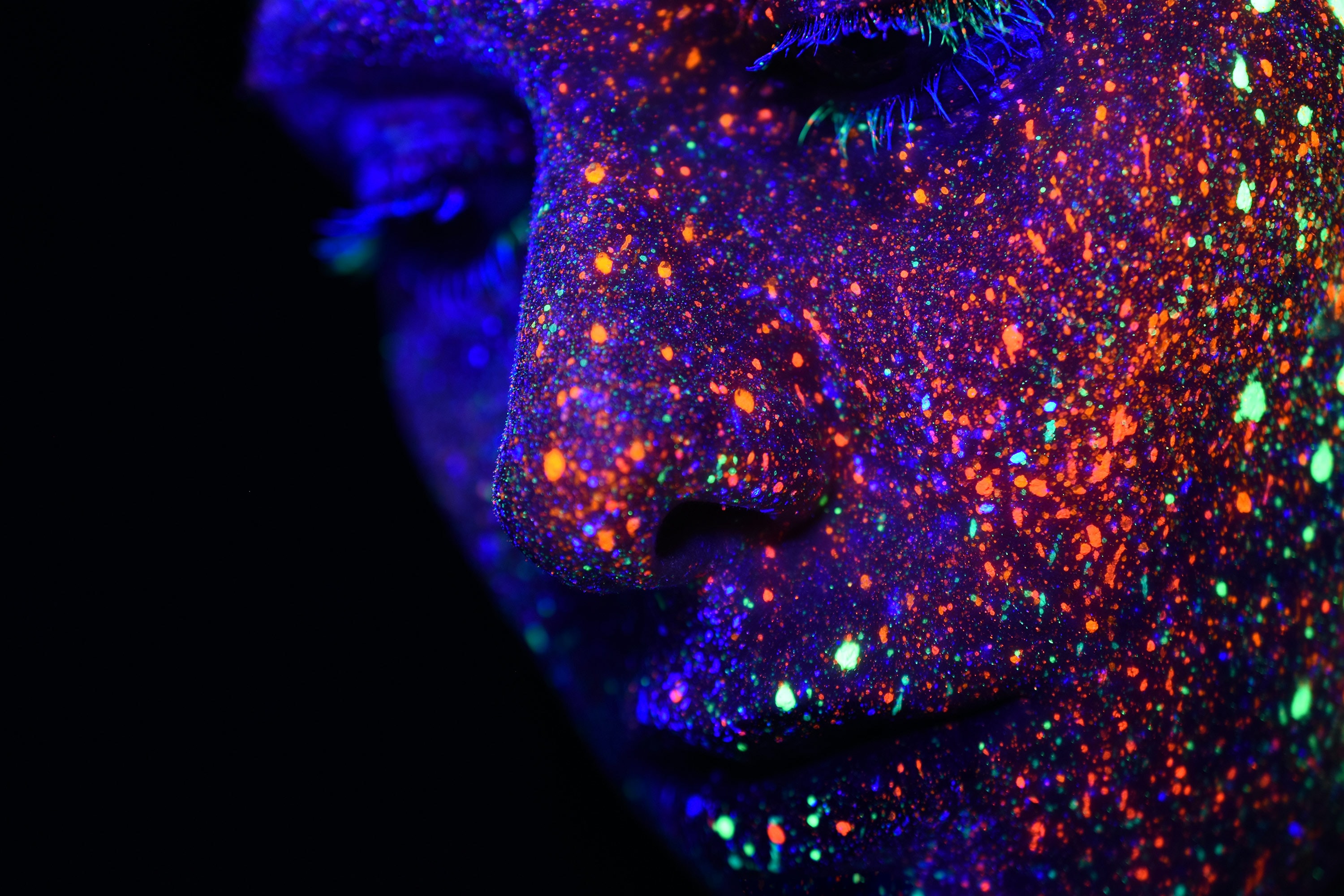
Thanks to h heyerlein for her photo on Unsplash
*I couldn’t remember how to spell Muzak, so I typed “What is the music called that plays while I’m on hold” into the Bing new “Ask me anything” chatbot. It provided the ten best on-hold waiting songs, including Hold the Line by Toto, Hold On by Wilson Phillips, and The Waiting by Tom Petty & The Heartbreakers. Eye roll. I then remember there was a “z” in Muzak and voila, the browser confirmed the spelling.
[1] Reinventing search with a new AI-powered Microsoft Bing and Edge, your copilot for the web, Official Microsoft Blog, February 7, 2023
[2] ChatGPT: Optimizing Language Models for Dialogue, OpenAI
[5] Machine Learning Warning, Mariah Espada and Solcyre Burga, TIME, January 30/February 6, 2023
[6] Internet Privacy Statistics to Make You Wonder Who’s Got Info on You, Nikolina Cveticanin, DataProt, January 20, 2023
 scribbles