
A few weeks ago, I mentioned in Pushing Pause on Technology, around 66% of people suffer from nomophobia, fear of being without a smart or cellular phone.
In a relatively short period of time, mobile phones have become as important as a pacemaker, controlling the rhythm of our lives from making calls to responding to emails and text, posting on social media, capturing the moments of our lives, reviewing documents, researching goods and services, checking traffic and getting directions, listening to music, viewing videos, and much, much more.
We look at our phones before we go to bed, and when we first wake in the morning. Daily, our phones demonstrate their valuable, performing what was once unimaginable with extraordinary efficiency and simplicity. Stuck in traffic? With a few keystrokes and swipes, you can identify the hold-up, review alternative routes, and then view and hear directions.
 Need to deposit a check, add a receipt to an expense report or instantly see your account balance? It’s easy, using the camera on a smartphone and common apps.
Even activities which initially had structural complexities, crimping widespread adoption, are possible using common mobile devices. For instance, many companies have dabbled in mobile payments. However, being able to pay with a phone didn’t take off until host card emulation (HCE) functionality was included in the Android KitKat 4.4 operating system along with the introduction of near communication (NFC) technology for in-store mobile payments, and OEM payment platforms like Android Pay, Apple Pay, and Samsung Pay.
Solving the technological issues lead to a lessening of consumers’ trepidations. Today, using a cellular device to make a purchase is commonplace. Nearly one-third of in-store purchases at Starbucks are via a mobile wallet.
Tom Shaw, vice president, investor relations for Starbucks, called mobile one of the two “critical” elements for retailers today. The success of Starbucks’ mobile payment experience relies on QR codes, which simplifies the process.
McDonald’s also had a mobile app, which utilizes QR codes to read and pay for purchases. Like Starbucks, McDonald’s offer rewards as an incentive for using their mobile app.
Future of Effortless Commerce
What’s partially driving the adoption of mobile payment, more than the technological innovation, is consumers who relish the convenience (and no hassle) of using their mobile device instead of cash, credit cards or other forms of payment.
Imagine wheeling a cart through a grocery store, and as you add items, they’re tallied and payments are automatically deducted from your account so once you’re done shopping, you simply need to bag your groceries and leave.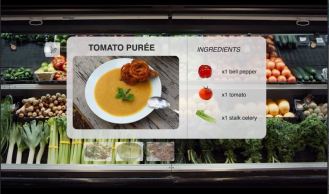
Sunnyvale-based Rambus, which creates cutting-edge semiconductor and IP products, spanning memory and interfaces to security, smart sensors and lighting, is striving to simplify commerce by introducing beacons and integrated sensors that present real-time recommendations and enable in-aisle purchases.
The experience would be frictionless from initialization and authentication through confirmation of payments without the merchant or consumers having to do anything. In-store invisible payments would offer the same level of convenience as hailing a ride from Uber, and having the payment seamlessly processed as you get out of the car, upon reaching your destination.
To enable in-store invisible payments, Rambus is utilizing several different technologies, including geolocation, communication, computer vision, biometric technologies, and beacons. The latter is essential for detecting customers’ presences, and thereby connecting and communicating with their mobile devices.
While Rambus’ solution is still in the experimental stage, other companies are expanding upon and honing mobile check-out. Some with more success than others.
In February, Google announced they were shelving their Hand Free experimental payment app, which enabled customers to pay for items simply by saying to a cashier, “I’ll pay with Google.” The app used Bluetooth, Wi-Fi, and location services to identify the user’s phone, which contained the user’s payment options and photo. 
At check-out, the phone would be automatically detected and the cashier presented with the user’s photo to compare to the person standing in front of them. Without having to show their phone, the transaction would automatically take place.
While Hands Free never took off, Android Pay is zooming ahead, and supposedly used in “millions of stores around the world, wherever contactless payments are accepted.” Users simply need to unlock their phones and hold them up to a terminal at check-out to transfer payments. Currently, over 100 U.S. retailers accept Android Pay.
Modern Shopping Experience Still Science Fiction
The challenge remains. How do you enable shoppers to pluck products off the shelves, place them in a cart, and then have payments automatically deducted from their accounts?
One possibility is enabling a mobile device to scan a product and then transfer the funds to the retailer. However, having to scan every item wouldn’t save shoppers time, and it certainly wouldn’t be a positive experience, having to bag produce, place it on a scale, and then scan the resulting price and weight.
Another option would be to have smart shopping carts that connect with users’ mobile devices, and can automatically detect and account for items placed in the cart. As the user leaves the store, they can either print out a receipt or have one sent to their emails (or mobile account).
A few years ago, Whole Foods placed a Kinect for Windows sensor on a shopping cart. According to GeekWire, “The motorized cart identifies a shopper with a loyalty card, follows the shopper around the store, scans items as they’re placed inside, marks them off the shopping list, and even checks the shopper out in the end.”
With Amazon’s recent purchase of Whole Foods and the success of Amazon Pay, the ability to pay as you shop might evolution from science fiction to reality.
Thanks to Bart Anestin and Jenna Day for the great pictures from Unsplash, and grocery images from Rambus.
 scribbles